- Introduction
- Why Front Entry Design Matters
- Set Clear Goals Before Choosing Materials
- Match the Entry to the Home’s Architecture
- Balance Natural Light and Privacy
- Plan for Weather, Comfort, and Daily Use
- Choose Color, Hardware, and Finishes
- Use Lighting to Improve Safety and Appeal
- Build a Practical Front Entry Budget
- Common Planning Mistakes to Avoid
- Front Entry Refresh Checklist
A front entry update can improve more than curb appeal. The right choices can make the home feel brighter, more comfortable, easier to use, and better protected from the weather. Before shopping for finishes or hardware, start with accurate dimensions. This guide on how to measure an exterior door can help you document the door slab, frame, and opening so you can plan around what the space can realistically accommodate.
The most successful projects balance style with practical needs. A dramatic door color may catch attention, but it should still work with the exterior, provide the desired level of privacy, and withstand daily use. Whether the goal is a full door replacement or a modest refresh, clear priorities help prevent expensive decisions that look good in the short term but do not serve the home well.
Why Front Entry Design Matters
The front door is a visual focal point, but it is also a hard-working part of the house. It affects the transition from outdoors to indoors, the amount of daylight in the foyer, the sense of privacy from the street, and the ease of welcoming guests or receiving deliveries. Current design direction favors homes that feel calm, personal, and durable, with thoughtful details rather than excessive decoration. Recent guidance on home design trends for windows and doors also emphasizes comfort, resilience, natural light, and intentional choices.
That makes restraint valuable. A well-planned entry should complement the home’s character instead of copying a look that may feel dated after a season or two.
Set Clear Goals Before Choosing Materials
Write down what is not working about the existing entry, then choose the two or three outcomes that matter most. Common goals include:
- Improving curb appeal without changing the full facade.
- Adding daylight to a dim foyer.
- Reducing drafts, outside noise, or rain exposure.
- Increasing privacy from nearby sidewalks or homes.
- Making the entrance easier for children, visitors, or older adults to use.
- Preparing the property for sale.
For example, a homeowner focused on privacy and energy performance may choose a solid or lightly glazed door with strong weatherstripping. Someone focused on daylight may prioritize sidelights or textured glass. Naming the goals early makes later tradeoffs easier.
Match the Entry to the Home’s Architecture
The entry should look connected to the roofline, windows, siding, porch, and landscaping. Study those features before selecting a door style, trim profile, or light fixture.
Style Pairings to Consider
- Traditional homes: Raised panels, balanced trim, classic handles, and rich paint or stain colors often fit naturally.
- Craftsman homes: Warm wood tones, simple divided glass, horizontal lines, and substantial trim can reinforce the architecture.
- Modern homes: Clean shapes, minimal hardware, large glass areas, and restrained finishes can support a simpler facade.
- Mediterranean homes: Earthy colors, textured surfaces, arched details, and iron accents may feel appropriate.
- Farmhouse homes: Straightforward panel designs, soft colors, black or aged-metal hardware, and natural accessories can work well.
Balance Natural Light and Privacy
Glass can make an entry feel more open, but it changes how much of the interior is visible from outside. Clear glass offers the most direct view and daylight. Frosted, textured, patterned, or partially obscured glass can admit light while limiting visibility. Sidelights and transoms can brighten a foyer without requiring the entire door to be glazed.
Check the entry in the morning, afternoon, and evening before deciding. A shaded entrance may benefit from more glass, while a west-facing door can receive strong afternoon sun and may need more privacy, reduced glare, or better solar control. Also consider views from neighboring windows and the street after dark, when interior lighting makes the foyer more visible.
Plan for Weather, Comfort, and Daily Use
A front entry must handle local conditions, including rain, snow, wind, humidity, heat, and direct sunlight. Select materials and finishes that fit both the climate and the maintenance you are willing to perform. A covered porch can reduce direct exposure, but it does not eliminate the need for proper flashing, seals, weatherstripping, and a well-fitted threshold.
Look closely at how the doorway functions. Make sure the swing direction works with the porch and interior layout. Confirm that packages will have a sheltered spot when possible, and keep steps, mats, and thresholds clear enough for safe passage. A durable system may cost more initially, but it can be a better value if it avoids frequent refinishing or premature repairs.
Choose Color, Hardware, and Finishes
Color Tips
Use color to create balance, not competition. A bold door can give a simple exterior a clear focal point. On a facade with brick, stone, multiple siding colors, or heavy trim, a quieter neutral may create a more settled look. Zillow’s research on front door colors and buyer perceptions found that color preferences varied with exterior complexity, so there is no single best choice for every home.
Test paint or stain samples on the actual door area. Colors change under morning sun, afternoon light, shade, porch lighting, and nearby landscaping.
Hardware Tips
- Choose hardware that is proportional to the door rather than undersized or overly ornate.
- Use one primary metal finish for a more cohesive appearance.
- Select finishes suited to moisture, sunlight, and frequent handling.
- Consider a lever handle if an easier operation is important.
- Add a peephole, smart lock, or doorbell camera only when it solves a real household need.
Use Lighting to Improve Safety and Appeal
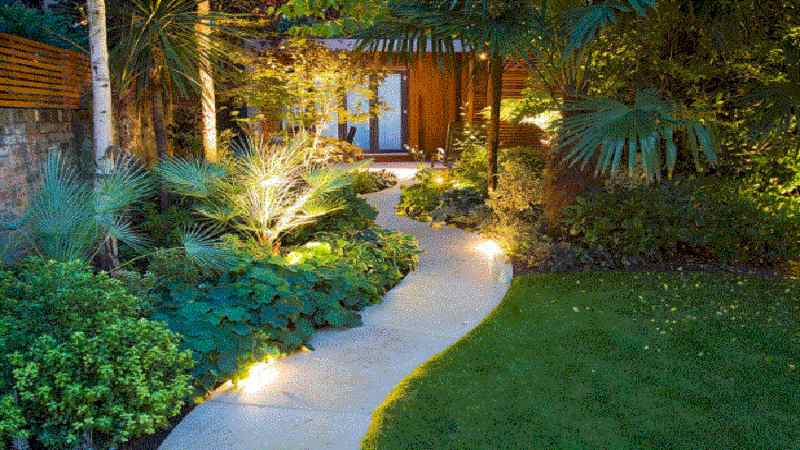
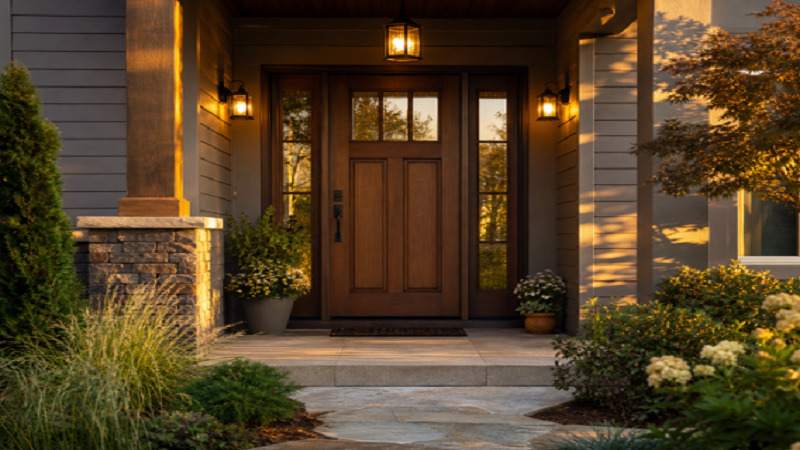
Layered lighting helps the entry feel welcoming after dark. Wall lanterns or an overhead fixture provide general light. Low path lights can make steps and walkways easier to see. Gentle accent lighting can highlight plants, columns, or house numbers, while motion-activated fixtures can address dark areas around the entrance. Choose warm, even illumination and avoid fixtures aimed directly at visitors’ eyes.
Build a Practical Front Entry Budget
Separate essential work from optional upgrades. Core costs usually include the door or entry system, installation, hardware, finishing, trim repair, and weather protection. Optional additions may include sidelights, new lighting, house numbers, planters, landscaping, a mat, or porch seating.
Set aside a contingency amount for concealed damage, out-of-square framing, electrical adjustments, or repairs discovered after old materials are removed. A written budget keeps the project focused and helps prevent small upgrades from becoming unplanned major expenses.
Common Planning Mistakes to Avoid
- Choosing a style that conflicts with the home’s architecture.
- Focusing on color while overlooking weather exposure and door performance.
- Mixing too many finishes in a small visual area.
- Adding glass without considering privacy, glare, and heat.
- Installing lighting that creates harsh glare or leaves steps in shadow.
- Ignoring how the entry looks and feels from inside the home.
- Ordering before measurements and installation requirements are confirmed.
Remember that online inspiration photos may not translate directly to a real home. Camera angles, editing, landscaping, and ideal lighting can make a design appear different from how it will look on an ordinary day.
Front Entry Refresh Checklist
- List the current entry’s practical and visual problems.
- Choose your top priorities for design, comfort, and privacy.
- Review the architecture, exterior colors, and porch proportions.
- Assess daylight, nighttime visibility, and street-facing privacy.
- Compare materials, glass options, finishes, and maintenance needs.
- Select coordinated hardware and lighting.
- Create a budget with room for unexpected work.
- Review specifications and consult qualified professionals for structural or electrical concerns.
Final Thoughts
A strong front entry does more than make a good first impression. It should suit the home, welcome daily life, manage the weather, provide the right balance of light and privacy, and remain appropriate over time. When style and performance receive equal attention, even a modest update can make the entire home feel more complete. See more